What Makes Tarrazú Coffee Special?
Tarrazú is a small mountain region in central Costa Rica, and it is one of the most respected names in coffee. If you have seen it on a bag and wondered why people talk about it the way wine lovers talk about famous valleys, this guide is for you.
We are not writing from the outside. The Montero family behind Aviadora Coffee has grown coffee in Tarrazú for four generations, since the 1940s. Here is what makes the region special, in plain words.
Where is Tarrazú, and why does altitude matter?
Tarrazú sits in the Los Santos area of Costa Rica's central mountains. Coffee farms there grow at roughly 1,200 to 1,900 meters above sea level, which is about 3,900 to 6,200 feet.
Altitude matters because the air is cooler up high. Coffee cherries ripen more slowly in cool mountain air, and coffee growers widely credit that slow ripening for the brighter acidity and more complex flavor of high grown coffee.
Our own family farms show the range. Finca Temática sits at 1,600 meters, where we grow our Natural Reposado. Finca La Pastora sits at 1,900 meters (6,234 feet), the home of our Semi-Washed.
For context, ICAFE notes that more than 80 percent of Costa Rica's coffee land sits between 800 and 1,600 meters. Many Tarrazú farms sit at or above the top of that range, which is part of why the region stands out.
What does SHB, or Strictly Hard Bean, mean?
SHB stands for Strictly Hard Bean. It is the highest grade in Costa Rica's coffee classification, and it is given to coffee grown above about 1,200 meters (roughly 3,900 feet).
Beans grown that high tend to be denser, which is where the word "hard" comes from. Café Britt estimates that nearly 95 percent of the beans grown in Tarrazú fall into the SHB category.
When you see SHB on a Costa Rican coffee, it tells you the coffee was grown high in the mountains, not that it was roasted a certain way.
When is Tarrazú coffee harvested?
The Tarrazú harvest runs for about five months, from November to March. That window lines up with the dry season, which runs from December to April. The rainy season lasts roughly from May to November.
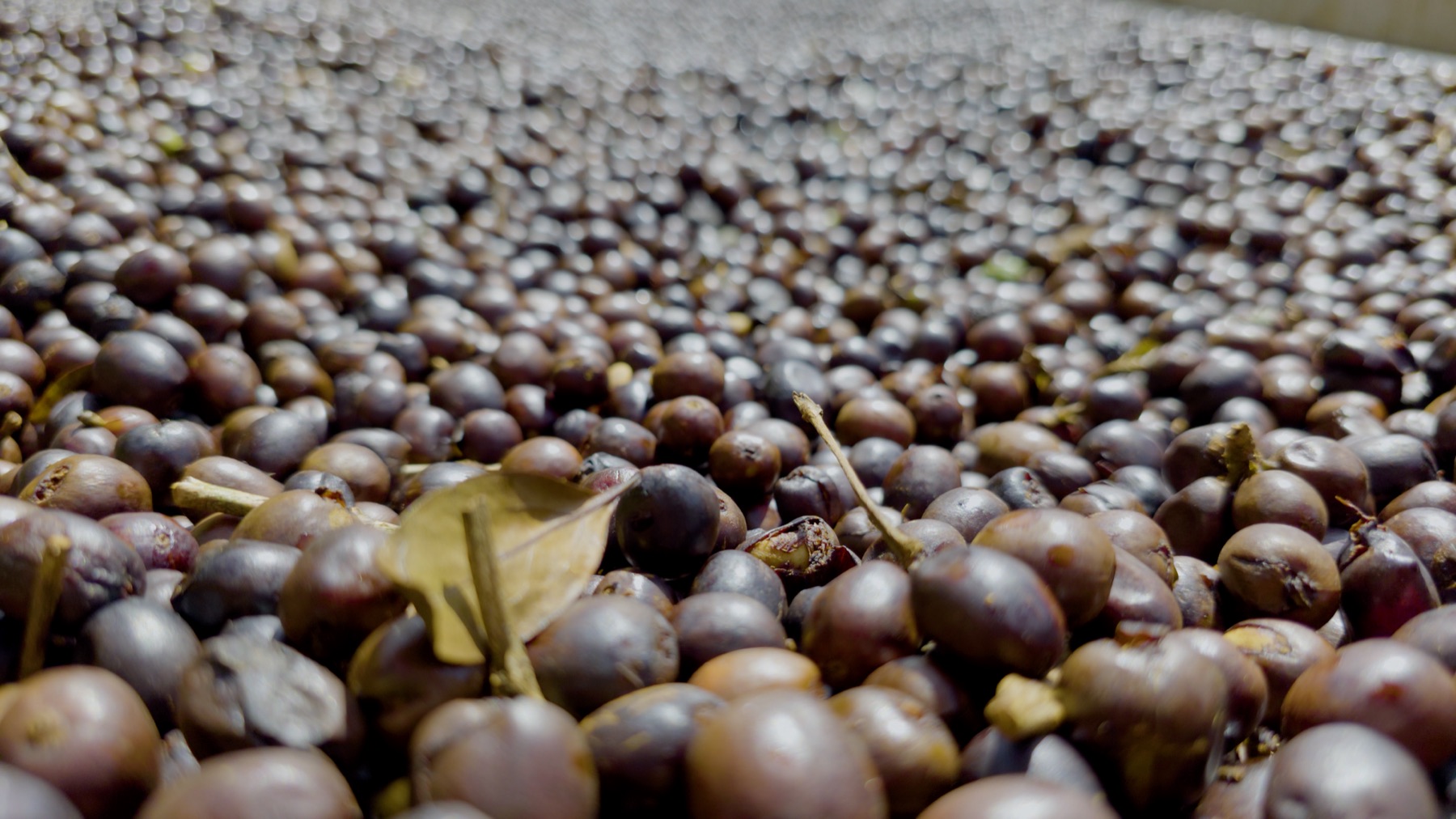
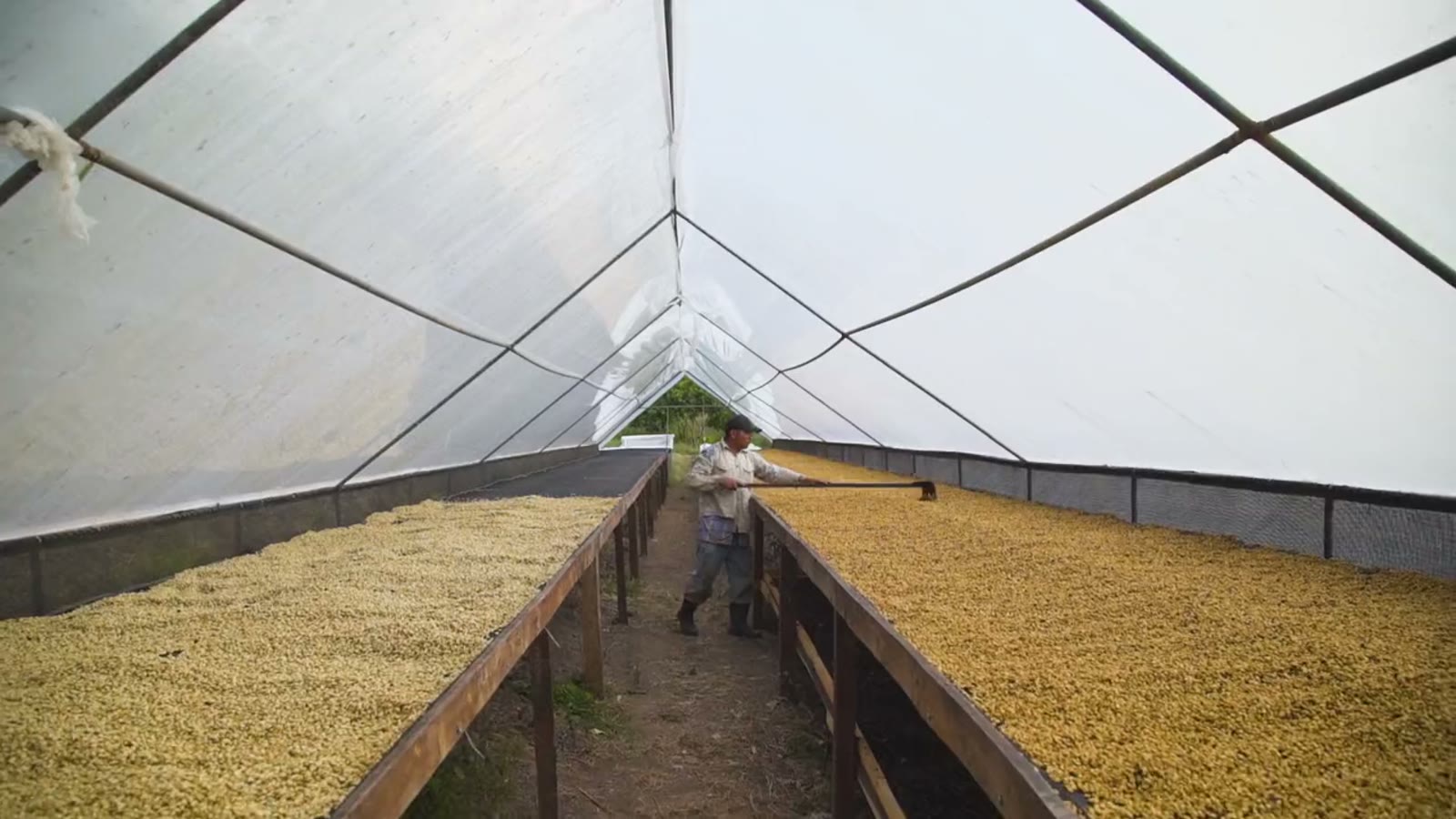
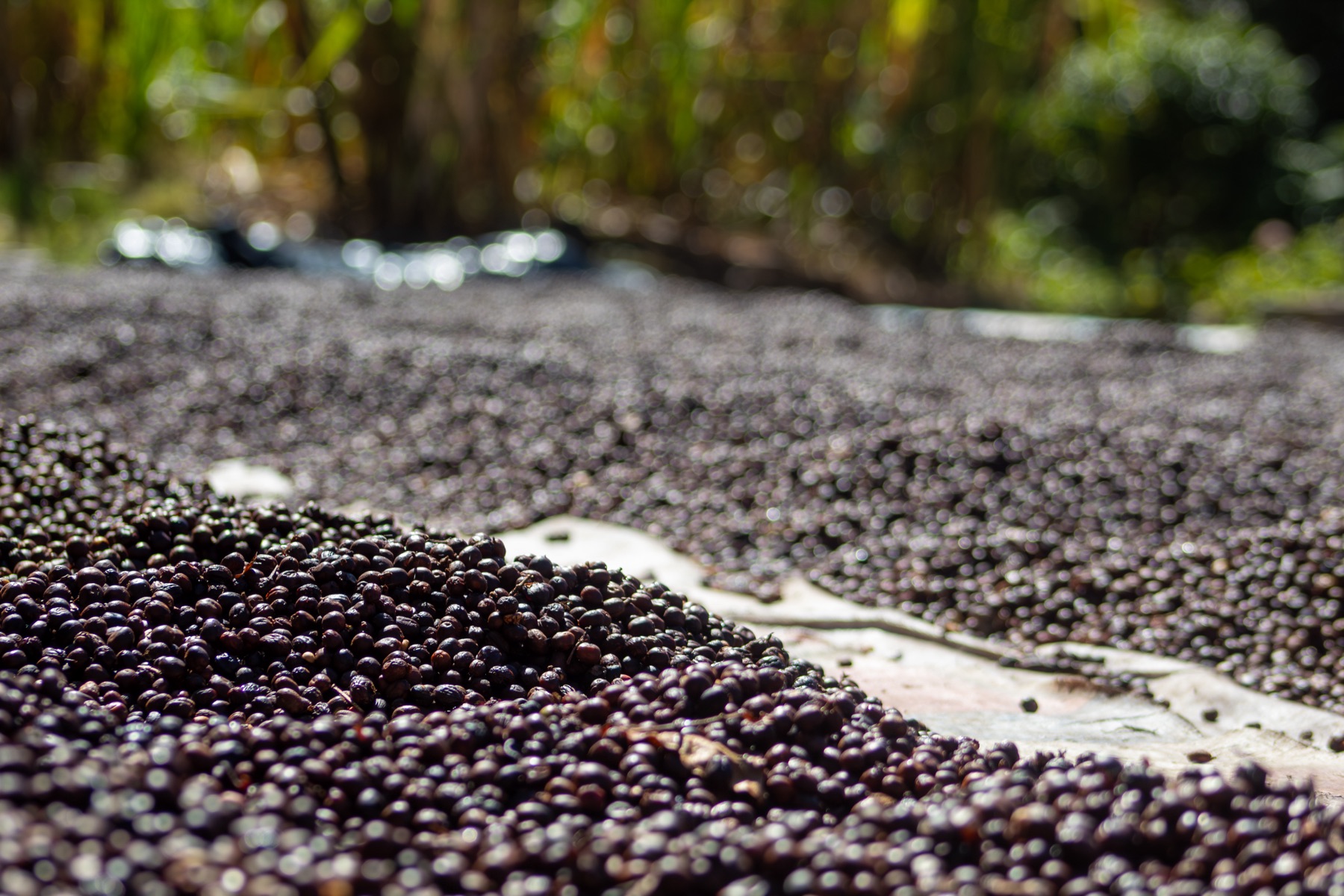
The timing is a gift for growers. Dry, sunny weather during the harvest makes it easier to dry coffee well on patios and raised beds, and careful drying protects flavor.
- Rainy season: about May to November, when the cherries grow and fill out.
- Harvest: November to March, picked by hand.
- Dry season: December to April, ideal for drying the coffee.
Picking is done by hand because cherries on the same branch ripen at different times. Pickers come back to the same trees again and again during the season to choose only the ripe red cherries. It is slow work, and it is a big reason the coffee tastes sweet and clean.
Why is Costa Rican coffee held to such a high standard?
Costa Rica has built its coffee reputation on quality instead of volume. According to ICAFE, the national coffee institute, 100 percent of the country's coffee is Arabica, mainly the Caturra and Catuaí varieties. In 1989 Costa Rica banned planting Robusta by law to protect cup quality.
ICAFE also describes the country's harvest as manual and selective, meaning pickers choose only ripe cherries. Each coffee region signed a quality agreement in which mills commit to receive and process only ripe fruit.
Costa Rica grows coffee in eight producing zones, and Tarrazú is one of the best known of them.
What does Tarrazú coffee taste like?
Tarrazú coffee is usually described as having good body, lively acidity, a clean and refined taste, a great aroma and a subtle chocolate note. That is the classic profile, and it is a big reason the region is so prized.
Processing can take that profile in different directions. Costa Rica is also strongly associated with honey processing, a style between washed and natural. Our two coffees show the difference:
- Natural Reposado: cherry, raspberry, juicy malic acidity, a creamy body and a long sweet finish.
- Semi-Washed: caramel, ripe fruit, balanced sweetness, bright acidity and a silky finish.
How does Aviadora bring Tarrazú to your cup?
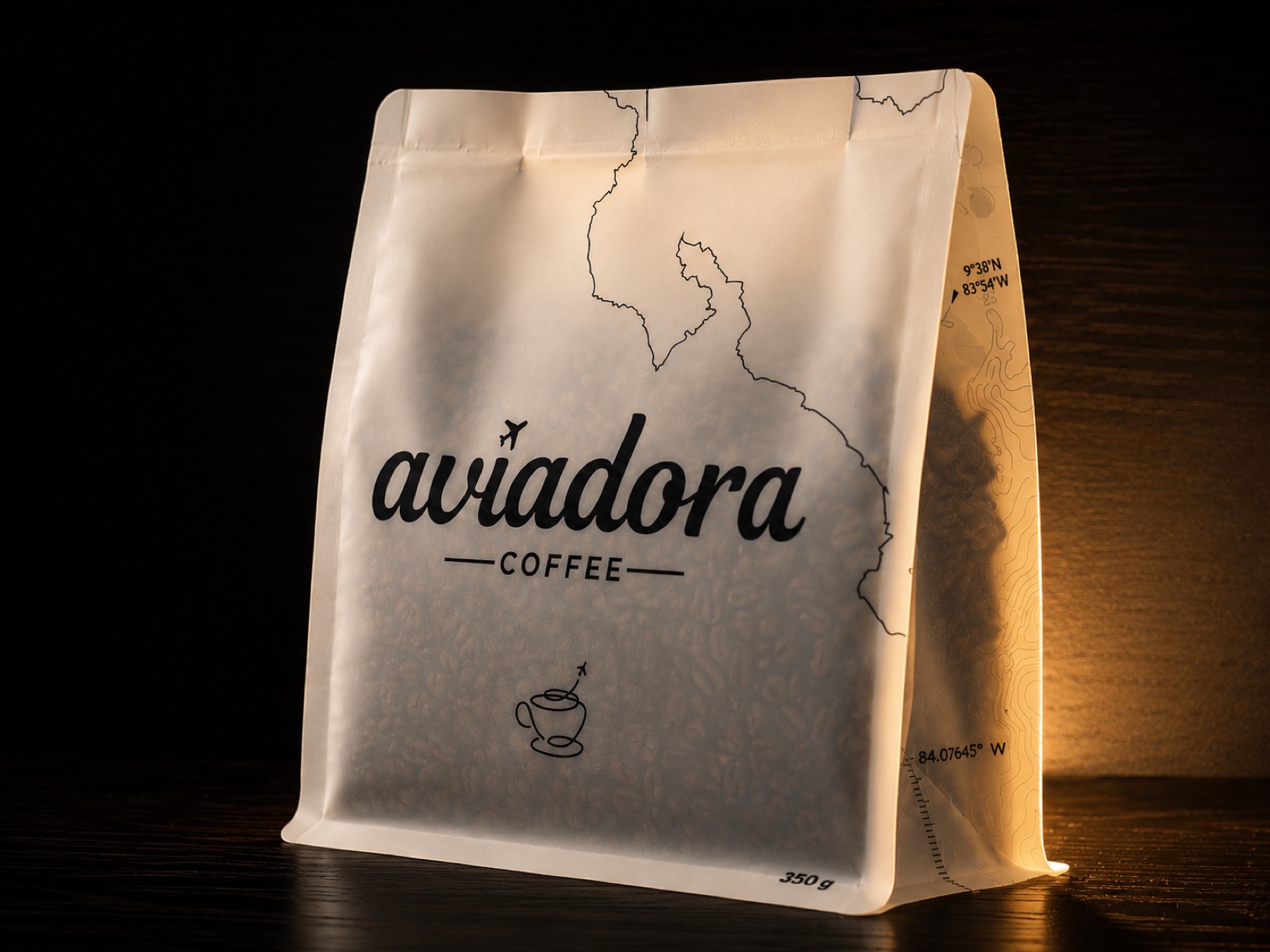
Aviadora is the coffee of the Montero family, four generations of growers in Tarrazú. Our family lots were Top 10 finalists three times: 8th place in 2021, 6th in 2022 and 6th in 2024.
Our founder, Maria Montero, is a pilot, and coffee from the family farm helped pay for her pilot training. Today she roasts every order to order, in small batches, in Naples, Florida. You can read more on our story page.
Ready to taste it? Browse our coffee, or set up a subscription and save 10 percent on every delivery.
Frequently asked questions
Is Tarrazú coffee 100% Arabica?
Yes. According to ICAFE, the Costa Rican coffee institute, all of Costa Rica's coffee is Arabica, mainly Caturra and Catuaí. The country banned planting Robusta by law in 1989 to protect quality.
At what altitude is Tarrazú coffee grown?
Tarrazú coffee grows at roughly 1,200 to 1,900 meters, or about 3,900 to 6,200 feet. Our family farms sit at 1,600 meters and 1,900 meters.
When is coffee harvested in Tarrazú?
The harvest runs from about November to March. It overlaps with the dry season, which helps growers dry the coffee carefully in the sun.
What does SHB mean on a Costa Rican coffee bag?
SHB means Strictly Hard Bean, the top grade in Costa Rica. It is given to coffee grown above about 1,200 meters, where the beans grow slowly and become denser.
Sources
- Instituto del Café de Costa Rica (ICAFE): El Mejor Café del Mundo
- Café Britt: A Look Into the Tarrazú Coffee Region
- Perfect Daily Grind: Washed, Natural, Honey: Coffee Processing 101
Informational only. Brewing results vary with your water, grinder and equipment.